Rejection of research papers is a common experience for agriculture students, early-career researchers, and even seasoned scientists. Despite months of fieldwork, data collection, and analysis, many agriculture research papers fail to pass the peer-review stage. Understanding why agriculture research papers get rejected is the first and most critical step toward improving publication success and building a strong academic profile.
In most cases, rejection is not about the topic itself but about how the research is designed, written, and presented.
Key Reasons Why Agriculture Research Papers Get Rejected
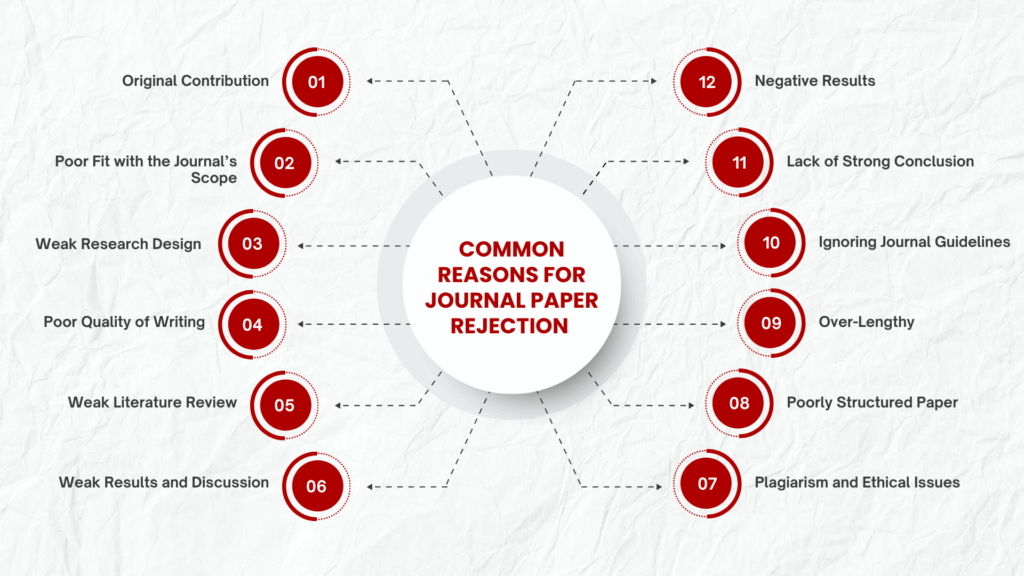
One of the most frequent causes of agriculture research paper rejection is weak research design. Journals expect clearly defined objectives, appropriate experimental layouts, valid sampling techniques, and statistically sound methodologies. When experiments lack replication, controls, or justification, reviewers quickly question the credibility of the results.
Another major issue is the lack of originality. Many papers repeat already established findings without offering new insights, localized relevance, or theoretical advancement. Agriculture journals increasingly prioritize innovative research questions that address real-world farming, livestock, climate, or food security challenges.
Inadequate data analysis is also a critical weakness. Incorrect statistical tests, superficial interpretation, or failure to link results with objectives often signals poor scientific rigor. Reviewers look for logical reasoning supported by appropriate analytical tools, not just tables and figures.
Insufficient literature review further weakens submissions. Papers that fail to engage with recent and relevant studies appear disconnected from ongoing scientific discourse. Proper citation of authoritative sources demonstrates awareness of research gaps and strengthens the study’s justification.
Finally, poor academic writing plays a decisive role. Even strong research can be rejected due to unclear language, inconsistent formatting, grammatical errors, and weak discussion sections. Scientific writing must be precise, concise, and structured according to journal expectations.
Practical Solutions to Improve Acceptance Rates
Improving acceptance starts with designing research correctly from the beginning. Clear objectives, well-defined hypotheses, and suitable methodologies aligned with the research problem are essential. Consulting standard research protocols and validating experimental designs before data collection can significantly reduce rejection risks.
Clarity in writing is equally important. Each section of the paper should serve a specific purpose, from introduction to conclusion. Logical flow, accurate terminology, and concise explanations help reviewers focus on scientific merit rather than language issues.
Strict adherence to journal guidelines is often underestimated. Formatting, referencing style, word limits, and ethical declarations must be followed exactly. Many papers are rejected at the editorial screening stage simply for failing to meet submission requirements.
Understanding Peer Review: What Reviewers Really Look For
The peer review process in agriculture journals is designed to assess scientific validity, originality, relevance, and clarity. Reviewers evaluate whether the research question is meaningful, the methodology is reliable, and the conclusions are supported by data. Understanding these criteria allows authors to critically evaluate their own manuscripts before submission.
Viewing peer review as a quality control system rather than a barrier helps researchers improve their work and align it with international publication standards.
How Pedigogy’s Research Hub Helps You Publish Better
Pedigogy.com’s Research Hub is designed to address exactly these challenges faced by agriculture and veterinary students. It offers structured guidance on research design, article types, topic selection, and academic writing, all tailored to agri-vet curricula and examination needs.
By using Pedigogy’s research resources, students can transform rejected manuscripts into publishable research and build confidence in academic communication. If you are serious about improving your research output, the Research Hub provides practical, step-by-step support beyond generic advice.
Final Thoughts: Turning Rejection into Research Excellence
Rejection is not a failure but a feedback mechanism. Most agriculture research papers get rejected due to avoidable issues related to design, originality, analysis, and presentation. By understanding these pitfalls and applying structured improvements, researchers can significantly increase their chances of publication.
With the right guidance, tools, and academic mindset, rejection becomes a stepping stone toward research excellence.
Want to improve your academic writing and referencing skills?
Explore Pedigogy’s Research and Publication Hub for expert-led lessons, citation tools, and writing guides tailored for B.Sc. Agriculture and B.V.Sc. & A.H. students. For more citation and research-writing guides, visit Pedigogy.com’s Research Hub — your trusted platform for research-based academic learning.
Updated on January 22, 2026