Skin is the largest organ of body which covers body surfaces.
:max_bytes(150000):strip_icc()/the-hypodermis-is-the-lowermost-layer-of-skin-2710144-the-hypodermis-is-the-lowermost-layer-of-skin-2710144-final-368dcf7a898b4b7798fd043fb337b709.png)
Function
- Provide protection from any harmful agents entering body
- Repair itself after injury
- Regulate body temperature
- Help in synthesis of vitamin D
- Acts as temporary storing of fat, glucose, salts, etc
- Gland of skin which secrets sebum onto hair follicle.
- Present all over skin except at soles and palms.
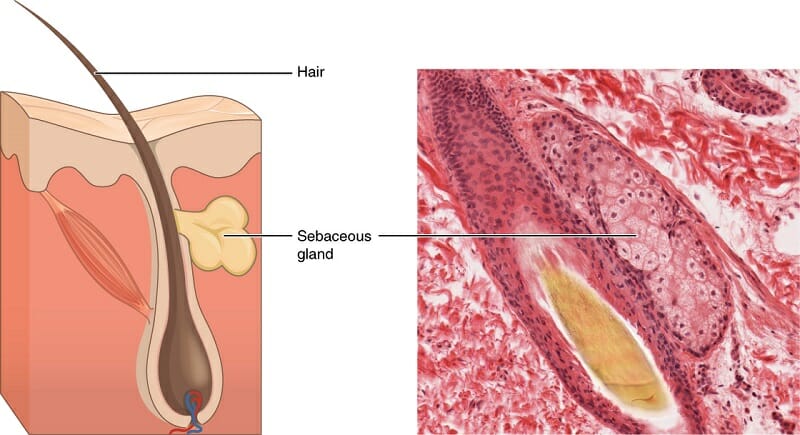
Functions
- Waxy substance sebum lubricates the hair and skin
- Acts as barrier to harmful microorganisms
- Acts as transporter of vitamin E
- Thermoregulation
Sweat glands
- Gland of skin which are small coiled like structure which secrets sweat
- Present in dermis region
Types of sweat glands
a. Eccrine sweat glands
- These are very numerous
- Found all over the body surface
- Mostly present on soles and palms
- Ducts open on skin surface
b. Apocrine sweat gland
- Larger than eccrine
- Found in armpits and perianal parts
- Ducts open into hair follicle
- Sweat can’t evaporate as eccrine so foul body color appears in that region.
Functions
- Secrets viscous and odorous substance called sweat
- Control body temperature
- Provide protection against pathogens
- Excretion of electrolytes and water